History of Philippine Cinema
INTRODUCTION
The youngest of the Philippine arts, film has evolved to become the most popular of all the art forms. Introduced only in 1897, films have ranged from silent movies to talkies; black and white to color. Outpacing its predecessors by gaining public acceptance, from one end of the country to the other, its viewers come from all walks of life. Nationwide, there are more than 1000 movie theaters. Early in the 1980s, it was estimated in Metro Manila alone, there were around 2.5 million moviegoers. As an art form, it reflects the culture and the beliefs of the people it caters to and most times, is the one who shapes their consciousness.
Philippine film as discussed in this paper includes films made by Filipino people exhibited in this country and possibly in other countries from the 1930s to the 1990s. The films may be silent pictures or talkies, black and white or color. They also include films such as documentaries, animation, experimental or alternative films and other types of films.
This paper has three purposes or objectives. It intends, first of all, to provide a comprehensible background of the art of film in the Philippines. It provides insights on how the Philippine film has influenced Philippine culture and vice-versa. This is done by documenting the important events and important films in the area of film for the past ninety years. Second, it intends to explain the different trends and styles common in the Philippine film. And finally, it concludes with an analysis on how two important events in history, namely World War II and Martial Law altered the course of contemporary Philippine film.
However, this paper is limited to films only from the particular time period of the 1930s to the 1990s. It fails to give a picture of how films were like ever since it started in 1897. This paper is also severely limited due to the unavailability and the lack of materials that discuss thoroughly the history of Philippine film. Film materials for those made during the pre-WWII years are simply non-existent. Data for this paper was gathered from the essays and reviews written by the artists and the critics themselves. It goes without saying that the resources were tested to the limits.
CHAPTER 1
I. The 1930s to 1940s
A. Early Philippine Films
Filipinos started making movies in 1919. However, it would be important to know that the film industry in the Philippines began through the initiative of foreign entrepreneurs. Two Swiss entrepreneurs introduced film shows in Manila as early as 1897, regaling audiences with documentary films lips showing recent events and natural calamities in Europe. Not only that but the arrival of the silent films, along with American colonialism, in 1903 created a movie market. But these film clips were still novelties. They failed to hold the audiences’ attention because of their novelty and the fact that they were about foreigners. When two American entrepreneurs made a film in 1912 about Jose Rizal’s execution, the sensation they made it clear that the Filipino’s need for material close to their hearts. This heralded the making of the first Filipino film.
The credit of being the first Filipino to make a film goes to Jose Nepumuceno, whom historians dub as the “Father of Philippine Movies”. Nepumuceno’s first film was based on a highly-acclaimed musical play of that day, Dalagang Bukid (Country Maiden) by Hemogenes Ilagan and Leon Ignacio.
In those early years of filmmaking, enormous capital was needed to keep up with the Hollywood industry. Despite its weak points, Hollywood provided the Philippine film industry with examples that the early filmmakers followed. It is not surprising that many of those same genres set so many years ago still appear in contemporary Philippine films. But it was difficult to match Hollywood style in those days with the meager capital set aside for the developing film industry. Ironically, the same people who helped the film industry develop as a form of expression were the same ones who suppressed this expression.
Early film producers included “wealthy Spaniards”, American businessmen and Filipino landlords and politicians. It is not surprising that…pre-war Philippine movies…were inhibited from expressing their views that might question the establishment and were encouraged instead to portray the love and reconciliation between members of different classes…
Starting with Dalagang Bukid, early films dug into traditional theater forms for character types , twists and turns in the plot, familiar themes and conventions in acting. This set the trend of Philippine films based entirely on immensely popular dramas or sarswelas . Besides providing ready materials, this device of using theater pieces ensured an already existing market. From the komedya of the sarswela, the typical Filipino aksyon movie was to develop. The line dividing the good and the bad in the komedya was religion with the Christians being the good and the Moors representing the bad. In present movies, the line that divides the two is now law or class division. The sinakulo or the passion play was the root of the conventional Filipino melodrama. The Virgin Mary became the “all-suffering, all-forgiving Filipino Mother” and Jesus was the “savior of societies under threat and the redeemer of all those who have gone wrong”. Another source of movie themes was Philippine literature. Francisco Baltazar and Jose Rizal, through the classics for which they were famous, have given the industry situations and character types that continue to this day to give meat to films both great and mediocre.
Finally, by the 1930s, a few film artists and producers dared to stray from the guidelines and commented on sociopolitical issues, using contemporary or historical matter. Director, actor, writer and producer Julian Manansala’s film Patria Amore (Beloved Country) was almost suppressed because of its anti-Spanish sentiments. This earned him the honor of being dubbed the “Father of the Nationalistic Film”.
Its own share of movie audience and acclaim for local movie stars were signs that the movie industry from 1919 to the 1930s had succeeded. Despite the competition coming from Hollywood, the film industry thrived and flourished. When the 1930s came to a close, it was clear that moviegoing had established itself in the Filipino.
B. Wartime Films and the Effect on Philippine Films
The Japanese Occupation introduced a new player to the film industry – the Japanese; and a new role for film – propaganda :
“The Pacific War brought havoc to the industry in 1941. The Japanese invasion put a halt to film activity when the invaders commandeered precious film equipment for their own propaganda needs. The Japanese brought their own films to show to Filipino audiences.” The films the Japanese brought failed to appeal to audiences the same way the Hollywood-made movies or the locally-made films did. Later on, Japanese propaganda offices hired several local filmmakers to make propaganda pictures for them. One of these filmmakers was Gerardo de Leon.
The war years during the first half of the Forties virtually halted filmmaking activities save for propaganda work that extolled Filipino-Japanese friendship, such as The Dawn of Freedom made by director Abe Yutaka and associate director Gerardo de Leon…Less propagandistic was Tatlong Maria (Three Marias), directed in 1944, by Gerardo de Leon and written for the screen by Tsutomu Sawamura from Jose Esperanza Cruz’s novel…Despite the destruction and hardships of the war, the people…found time for entertainment; and when movies were not being made or imported…they turned to live theater…which provided alternative jobs for displaced movie folk. The war years may have been the darkest in film history…”
This period turned out to be quite beneficial to the theater industry. Live theater began to flourish again as movie stars, directors and technicians returned to the stage. Many found it as a way to keep them from being forgotten and at the same time a way to earn a living.
In 1945…the film industry was already staggering to its feet. The entire nation had gone through hell and there were many stories to tell about heroic deeds and dastardly crimes during the 3 years of Japanese occupation. A Philippine version of the war movie had emerged as a genre in which were recreated narratives of horror and heroism with soldiers and guerillas as protagonists…audiences still hungry for new movies and still fired up by the patriotism and hatred for foreign enemies did not seem to tire of recalling their experiences of war.
Movies such as Garrison 13 (1946), Dugo ng Bayan (The Country’s Blood, 1946), Walang Kamatayan (Deathless, 1946), and Guerilyera (1946) , told the people the stories they wanted to hear: the heroes and the villains of the war. The war, however, had left other traces that were less obvious than war movies that were distinctly Filipino. As Patronilo BN. Daroy said in his essay Main Currents in Filipino Cinema: “World War II left its scars on the Filipino’s imagination and heightened his sense of reality…”
CHAPTER II
II. The 1950s to 1970s
A. The Golden Age of Philippine Films
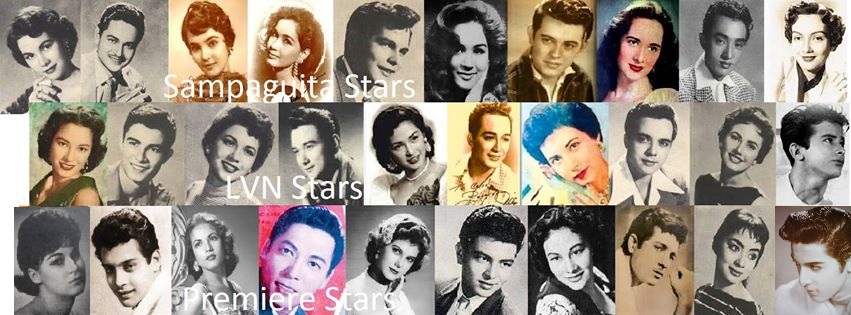
The 1950s were considered a time of “rebuilding and growth”. But remnants from the preceding decade of the 40s remained in the form of war-induced reality. This is seen is Lamberto Avellana’s Anak Dalita (The Ruins, 1956), the stark tragedy of post-WWII survival set in Intramuros. The decade saw frenetic activity in the film industry which yielded what might be regarded as the first harvest of distinguished films by Filipinos. Two studios before the war, namely Sampaguita Pictures and LVN, reestablished themselves. Bouncing back quickly, they churned out movie after movie to make up for the drought of films caused by the war. Another studio, Premiere Productions, was earning a reputation for “the vigor and the freshness” of some of its films. This was the period of the “Big Four” when the industry operated under the studio system. Each studio (Sampaguita, LVN, Premiere and Lebran) had its own set of stars, technicians and directors, all lined up for a sequence of movie after movie every year therefore maintaining a monopoly of the industry. The system assured moviegoers a variety of fare for a whole year and allowed stars and directors to improve their skills.
Critics now clarify that the 50s may be considered one “Golden Age” for the Filipino film not because film content had improved but because cinematic techniques achieved an artistic breakthrough in that decade. This new consciousness was further developed by local and international awards that were established in that decade.
Awards were first instituted that decade. First, the Manila Times Publishing Co. set up the Maria Clara Awards. In 1952, the FAMAS (Filipino Academy of Movie Arts and Sciences) Awards were handed out. More so, Filipino films started garnering awards in international film festivals. One such honor was bestowed on Manuel Conde’s immortal movie Genghis Khan (1952) when it was accepted for screening at the Venice Film Festival. Other honors include awards for movies like Gerardo de Leon’s Ifugao (1954) and Lamberto Avellana’s Anak Dalita. This established the Philippines as a major filmmaking center in Asia. These awards also had the effect of finally garnering for Filipino films their share of attention from fellow Filipinos.
B. The Decline of Philippine Film
If the 1950s were an ubiquitous period for film, the decade that followed was a time of decline. There was “rampant commercialism and artistic decline” as portrayed on the following:
In the 1960s, the foreign films that were raking in a lot of income were action pictures sensationalizing violence and soft core sex films hitherto banned from Philippine theater screens, Italian “spaghetti” Westerns, American James Bond-type thrillers, Chinese/Japanese martial arts films and European sex melodramas. To…get an audience to watch their films, (the independent) producers had to take their cue from these imports. The result is a plethora of films…giving rise to such curiosities as Filipino samurai and kung fu masters, Filipino James Bonds and…the bomba queen.
The studio systems came under siege from the growing labor movement which resulted in labor-management conflicts. The first studio to close was Lebran followed by Premiere Productions. Next came Sampaguita and LVN. The “Big Four” studios were replaced by new and independent producers who soon made up the rest of the film industry.
The decade also saw the emergence of the youth revolt best represented by the Beatles and the rock and roll revolution. They embodied the wanting to rebel against adult institutions and establishments. Certain new film genres were conceived just to cater to this “revolt”. Fan movies such as those of the “Tita and Pancho” and “Nida and Nestor” romantic pairings of the 50s were the forerunners of a new kind of revolution – the “teen love team” revolution. “Nora Aunor and Vilma Santos, along with Tirso Cruz III and Eddie Mortiz as their respective screen sweethearts, were callow performers during the heyday of fan movies. Young audiences made up of vociferous partisans for ‘Guy and Pip’ or ‘Vi and Bot’ were in search of role models who could take the place of elders the youth revolt had taught them to distrust”
Another kind of youth revolt came in the form of the child star. Roberta (1951) of Sampaguita Pictures was the phenomenal example of the drawing power of movies featuring [these] child stars. In the 60s this seemed to imply rejection of “adult corruption” as exposed by childhood innocence.
The film genres of the time were direct reflections of the “disaffection with the status quo” at the time. Action movies with Pinoy cowboys and secret agents as the movers of the plots depicted a “society ravaged by criminality and corruption” . Movies being make-believe worlds at times connect that make-believe with the social realities. These movies suggest a search for heroes capable of delivering us from hated bureaucrats, warlords and villains of our society. The action films of the 1960s brought into the industry “ a new savage rhythm that made earlier action films seem polite and stage managed.” The pacing of the new action films were fast as the narrative had been pared down to the very minimum of dialogues. And in keeping up with the Hollywood tradition, the action sequences were even more realistic.
Another film genre that is perhaps also a embodiment of the revolt of the time is the bomba genre. Probably the most notorious of all, this genre appeared at the close of the decade. Interestingly, it came at a time when social movement became acknowledged beyond the walls of campuses and of Manila.
In rallies, demonstrations and other forms of mass action, the national democratic movement presented its analysis of the problems of Philippine society and posited that only a social revolution could bring genuine change. The bomba film was a direct challenge to the conventions and the norms of conduct of status quo, a rejection of authority of institutions in regulating the “life urge” seen as natural and its free expression “honest” and “therapeutic”
Looking beyond the obvious reasons as to the emergence of the bomba film, both as being an exploitative product of a profit-driven industry and as being a “stimulant”, it can be analyzed as actually being a “subversive genre”, playing up to the establishment while rebelling and undermining support for the institutions.
Even in the period of decline, genius has a way of showing itself. Several Philippine films that stood out in this particular era were Gerardo de Leon’s Noli Me Tangere (Touch me Not, 1961) and El Filibusterismo (Subversion, 1962). Two other films by Gerardo de Leon made during this period is worth mentioning – Huwag mo Akong Limutin (Never Forget Me , 1960) and Kadenang Putik (Chain of Mud, 1960), both tales of marital infidelity but told with insight and cinematic import.
C. Films during Martial Law
In the 60s, the youth clamored for change in the status quo. Being in power, Ferdinand Marcos answered the youth by placing the nation under martial rule.
In 1972, he sought to contain growing unrest which the youth revolt of the 1960s fueled. Claiming that all he wanted was to “save the Republic”, Marcos retooled the liberal-democratic political system into an authoritarian government which concentrated power in a dictators hand. To win the population over, mass media was enlisted in the service of the New Society. Film was a key component of a society wracked with contradictions within the ruling class and between the sociopolitical elite and the masses.
In terms of comparisons, the Old Society (or the years before Martial Law) became the leading symbol for all things bad and repugnant. The New Society was supposed to represent everything good – a new sense of discipline, uprightness and love of country Accordingly, the ideology of the New Society was incorporated into local films.
…Marcos and his technocrats sought to regulate filmmaking. The first step was to control the content of movies by insisting on some form of censorship. One of the first rules promulgated by the Board of Censors for Motion Pictures (BCMP) stipulated submission of a finished script prior to the start of filming. When the annual film festival was revived, the censors blatantly insisted that the “ideology” of the New Society be incorporated into the content of the entries.
The government tried to control the film industry while keeping it in “good humor” – necessary so that the government could continue using film as propagandistic vehicles. So despite the censors, the exploitation of sex and violence onscreen continued to assert itself. Under martial law, action films depicting shoot outs and sadistic fistfights ( which were as violent as ever) usually append to the ending an epilogue claiming that the social realities depicted had been wiped out with the establishment of the New Society. The notorious genre of sex or bomba films that appeared in the preceding decade were now tagged as “bold” films, simply meaning that a lot more care was given to the costumes.
Martial Law declared in 1972 clamped down on bomba films as well as political movies critical of the Marcos administration. But the audience’s taste for sex and nudity had already been whetted. Producers cashed in on the new type of bomba, which showed female stars swimming in their underwear, taking a bath in their camison (chemise), or being chased and raped in a river, sea, or under a waterfall. Such movies were called the wet look…
One such movie was the talked-about Ang Pinakamagandang Hayop sa Balat ng Lupa (The Most Beautiful Animal on the Face of the Earth, 1974) starring former Miss Universe Gloria Diaz.
However, the less-than-encouraging environment of the 70s gave way to “the ascendancy of young directors who entered the industry in the late years of the previous decade…” Directors such as Lino Brocka, best remembered for his Maynila, Sa Mga Kuko ng Liwanag (Manila, In the Claws of Neon Lights, 1975), Ishmael Bernal, director of the Nora Aunor film Himala (Miracle, 1982) and Celso Ad. Castillo, whose daring works portrayed revolt, labor unionism, social ostracism and class division, produced works that left no doubt about their talent in weaving a tale behind the camera.
Another welcomed result that came from martial rule was the requirement of a script prior to filming. This was an innovation to a film industry that made a tradition out of improvising a screenplay. Although compliance with the requirement necessarily meant curtailment of the right of free expression, the BCMP, in effect caused the film industry to pay attention to the content of a projected film production in so far as such is printed in a finished screenplay. In doing so, talents in literature found their way into filmmaking and continue to do so now.
CHAPTER III
III. The 1980s to the present
A. Philippine Films after Marcos
It can be justified that immediately after Marcos escaped to Hawaii, films portraying the Philippine setting have had a serious bias against the former dictator. And even while he was in power, the militancy of filmmakers opposing the Martial Law government especially after the assassination of Ninoy Aquino in 1983, accounts for the defiant stance of a number of films made in the closing years of the Marcos rule.
Films such as Lino Brocka’s Bayan Ko: Kapit sa Patalim (My Country: Gripping the Knife’s Edge, 1985) were defiant, not in the sense of it being openly stated by in the images of torture, incarceration, struggle and oppression. Marilou Diaz-Abaya’s Karnal (1984) depicts this in a different way in the film’s plot wherein patricide ends a tyrannical father’s domination. Mike de Leon’s Sister Stella L. (1984), was a typical de Leon treatment of the theme of oppression and tyranny.
In 1977, an unknown Filipino filmmaker going by the name of Kidlat Tahimik made a film called Mababangong Bangungot (Perfumed Nightmare). The film won the International Critic’s Prize in the Berlin Film Festival that same year. Kidlat Tahimik’s rise to fame defined the distance between mainstream cinema and what is now known as independent cinema. Beginning with Tahimik, independent cinema and films became an accomplished part of Philippine film.
Out of short film festivals sponsored by the University of the Philippines Film Center and by the Experimental Cinema of the Philippines, young filmmakers have joined Kidlat Tahimik in the production of movies that, by their refusal to kowtow to the traditions and conventions of mainstream filmmaking, signify faith in works that try to probe deeper into the human being and into society. Nick Deocampo’s Oliver (1983) and Raymond Red’s Ang Magpakailanman (The Eternal, 1983) have received attention in festivals abroad.
Filmmakers like Tahimik, Deocampo and Red are examples of what we call “alternative filmmakers”. Alternative or independent filmmakers are products of film schools where students are exposed to art films without “the compromises of commercial filmmaking”.
B. Contemporary Philippine Film
Despite our completion of 100 years of cinema in the Philippines, the same problems plague us now just as it had when film was still a relatively new art form. The phrase “poorly made” is fitting to describe the quality of films being churned out by the film industry year by year. There have been few exceptions to the rule.
Presently, films are primarily made for profit, lacking any qualities to redeem itself. Studies show that Hollywood films, with its high technology and subject matter, are being preferred over local films. It is no wonder – for films now are “too profit-oriented…[with] corrupting morals and…dubious values…sticking with formulaic films”
Genres that have been present for the past few decades are being recycled over and over again with the same stories. The teen love teams of the fan movie are still present with incarnations of love teams of yesteryears. Now instead of “Guy and Pip” are “Judy and Wowie”. The bomba film is still present, now having grown more pornographic and taboo. The film Tatlo (1998) comes to mind with its subject matter of threesomes. In Filipino slapstick or komedya, Dolphy has been replaced by younger stars.
But even if the films of today have not been quite up to par, “Filipino movies…wields an influence over the national imagination far more intense that all the others combined.”
CONCLUSION
The early years of Philippine film, starting from the 1930s, were a time of discovering film as it was at that time still a new art form. Stories for films came from the theater and popular literature being, as they were, “safe”, with the filmmaker being assured of its appeal. Nationalistic films were also in vogue despite early restrictions on films being too subversive.
The 1940s and the war brought to Philippine film the consciousness of reality which was not present in the preceding films. Filmmakers dared to venture into the genre of the war movie. This was also a ready market especially after the war.
The 1950s were the Golden Years, a time when films matured and became more “artistic”. The studio system, though producing film after film and venturing into every known genre, made the film industry into a monopoly that prevented the development of independent cinema.
The 1960s, though a time of positive changes, brought about an artistic decline in films. The notorious genre of bomba was introduced and from that day forward has been present in the Philippine film scene ever since.
The 1970s and 1980s were turbulent years, bringing positive and negative changes. From the decline in the 60s, films in this period now dealt with more serious topics following the chaos of the Marcos regime. Also, action and sex films developed further introducing more explicit pictures. These years also brought the arrival of alternative cinema in the Philippines.
Presently, in the 1990s, we are seemingly engaged in a vicious cycle – of genres, plots, characterization and cinematic styles. We are unconsciously, or rather consciously, imitating, copying from the much more popular American films. And when we are not copying, we are reverting back to the same old styles. From the massacre movies of late, the teen-oriented romantic-comedies and the anatomy-baring sex flicks which are currently so popular, it seems Philippine cinema is on a down spiral. Still, some films been successes and not only financially. Diaz-Abaya’s Rizal (1998), as an example, was a success both commercially and critically. Hopefully, Philippine cinema in the new millennium would produce films as good and better than the ones before it.
As a conclusion, here is what Patronilo BN. Daroy had to say about the Philippine film industry:
Philippine cinema, in short, appears to have reached full circle: it is at the stage of refining and formulating its own conventions and, in the process, getting in close contact with the ferment in the other arts and at the same time, the serious critical attention and concern of people with a broader interest in culture. This is inevitable; as an art form the cinema in the Philippines can no longer remain isolated from the main current of sensibilities and ideas that shape other artistic forms, such as literature, painting, the theater, etc. Neither can it fly from the actuality of social life which, after all, is the source of all artistic expression. I foresee, therefore, a hand towards more serious cinema; the muckrakers will continue, but they will be exposed for what they are and will no longer be definitive of the quality of Filipino films.